

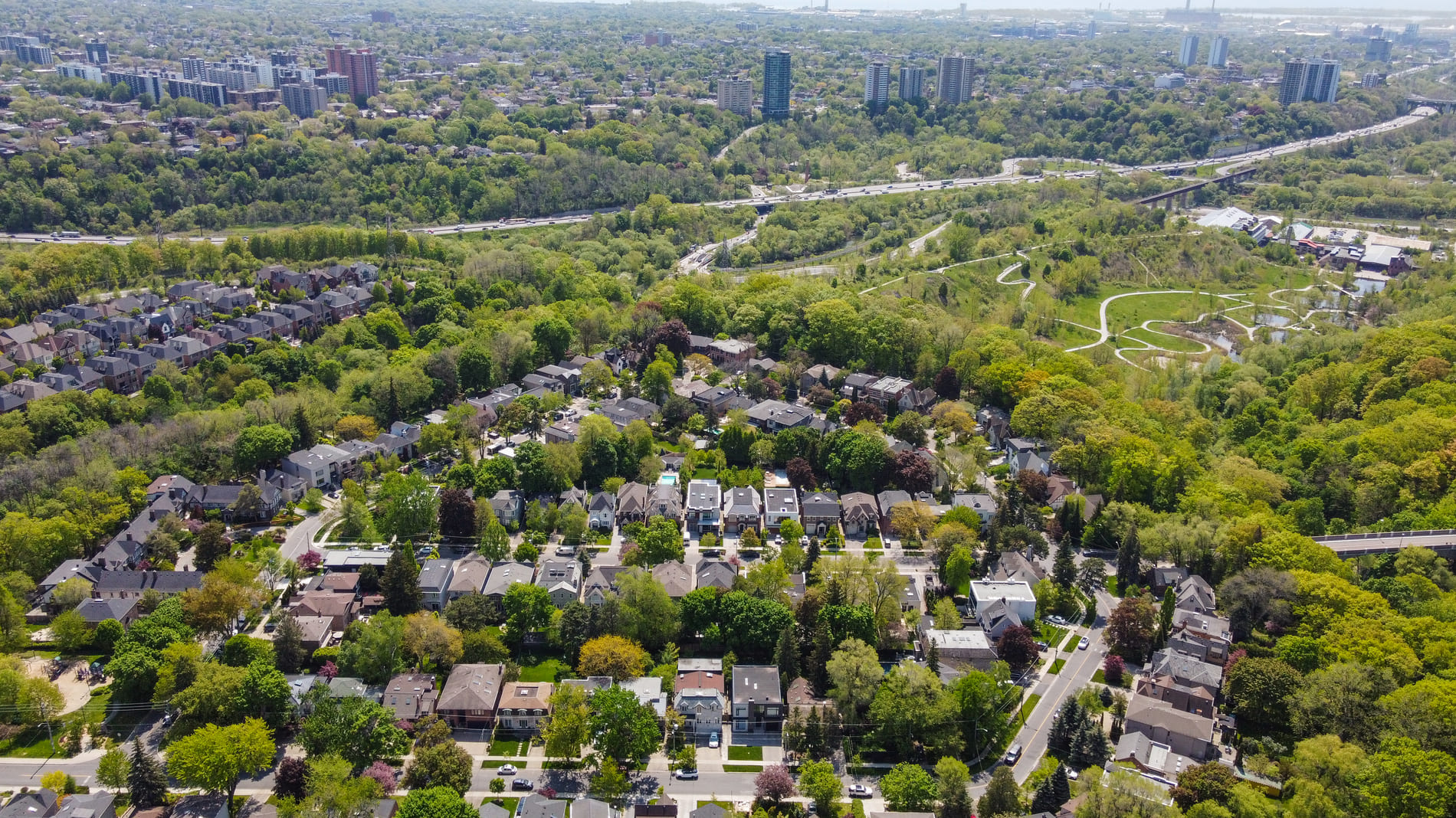
Rosedale is the neighbourhood most people picture when they imagine established Toronto. Winding streets that follow the contours of the ravines rather than a grid, heritage homes set well back from the road, a mature canopy that closes overhead in summer, and a sense of quiet that seems impossible given how close it sits to the centre of the city. This guide covers what living in Rosedale is actually like, what the market looks like, and what buyers and sellers should understand about one of Canada's most prestigious residential neighbourhoods.
Rosedale at a glance
- Location: Central Toronto, north and east of Yorkville, bounded by the Rosedale Valley and Don Valley ravine systems.
- Average home price: Approximately $3.4 million, with significant variation above and below.
- Known for: Heritage architecture, winding ravine-lined streets, and one of the highest concentrations of top schools in Toronto.
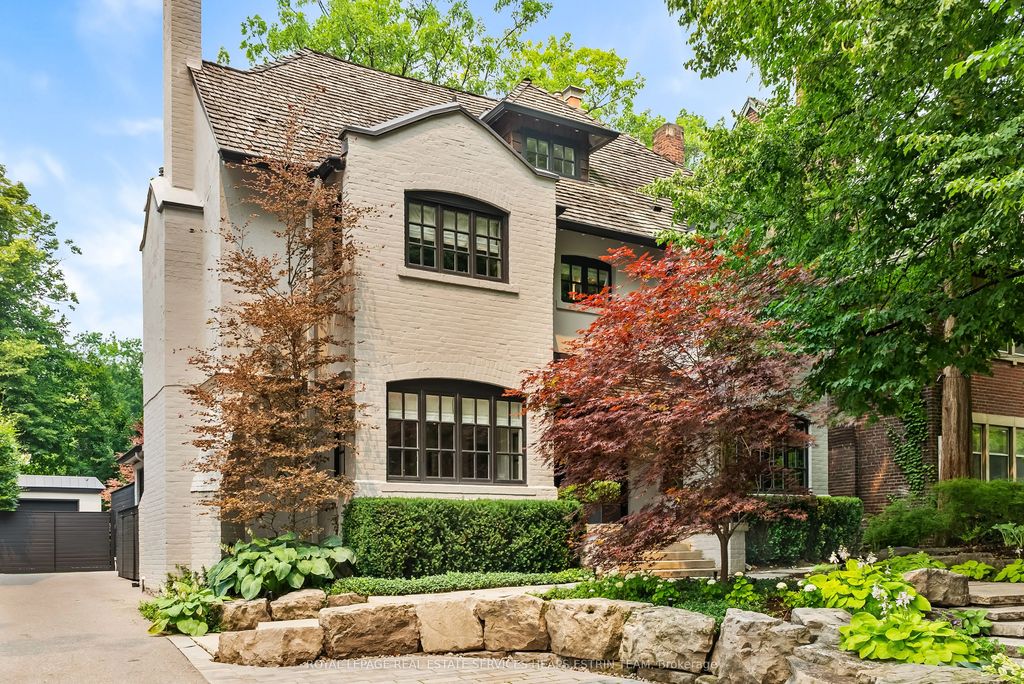
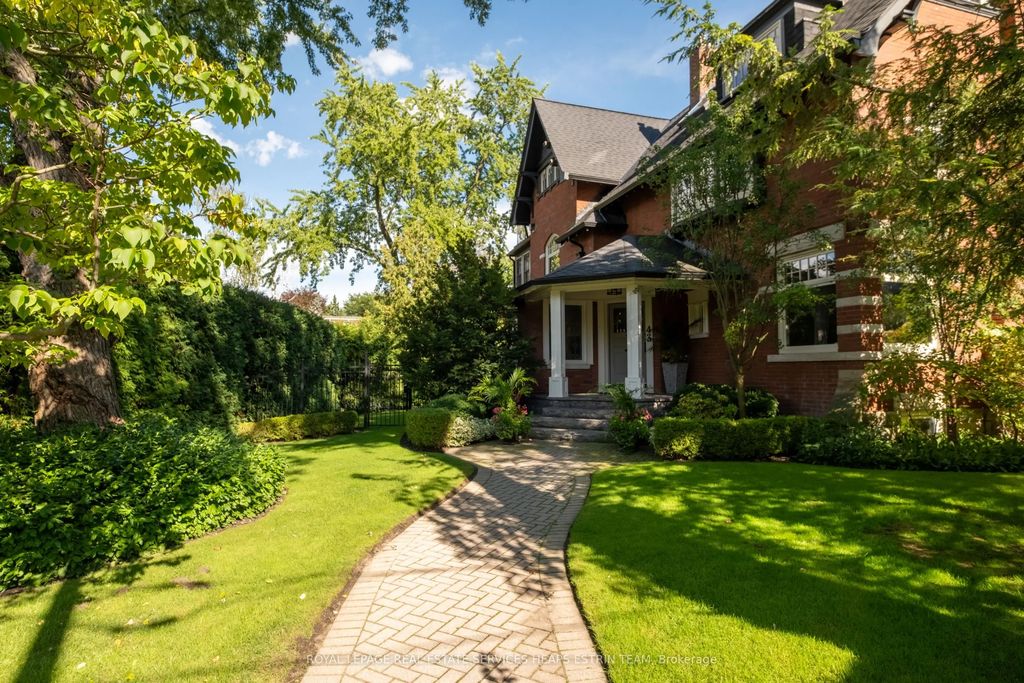
- Housing stock: Victorian, Edwardian, Georgian Revival, and Tudor Revival detached homes, many heritage designated.
- Best suited to: Buyers who want architectural significance, privacy, and ravine setting close to the city centre.
Search Rosedale Real Estate Listings

Where Rosedale Is
Rosedale sits in central Toronto, north and east of Yorkville, bounded loosely by the Rosedale Valley to the south, the Don Valley to the east, and the Summerhill and Yonge Street corridors to the west. It is not part of Downtown Toronto, though the distinction matters less than the geography suggests. The financial district is minutes away, Yorkville is a short walk from the neighbourhood's western edge, and yet Rosedale itself feels genuinely removed.
That sense of separation is not accidental. Rosedale is bounded by ravine on multiple sides, which limits through traffic and gives the neighbourhood clear physical edges. Streets curve rather than run straight, following the original topography, and the result is a place where getting lost is easy and passing through by accident is nearly impossible.
Locals generally distinguish between South Rosedale, below the CPR tracks and closer to the Rosedale Valley, and North Rosedale, above them toward Mount Pleasant. Both are highly desirable and each has its own character.
Where the Rosedale Name Comes From
Rosedale takes its name from the wild roses that once grew throughout the area's rolling hills and valleys. When development began in the nineteenth century, the natural landscape, particularly the rose-filled ravines, inspired the name, and it has proven a fitting one. More than a century later, the relationship between the neighbourhood and its ravines remains the defining feature of living here.
Rosedale Architecture and Housing Stock
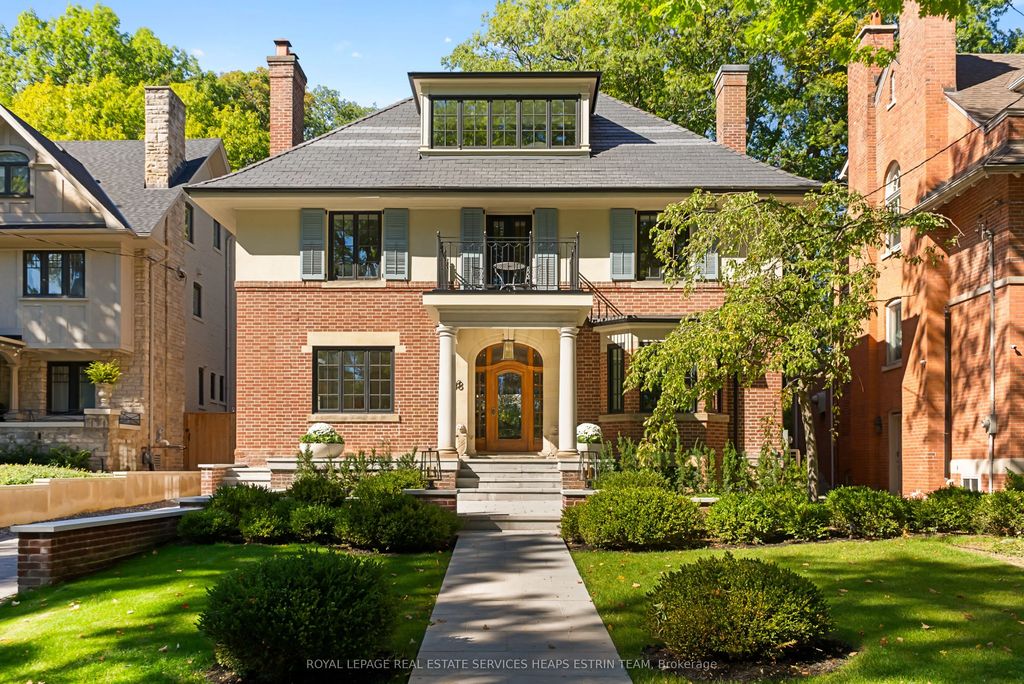
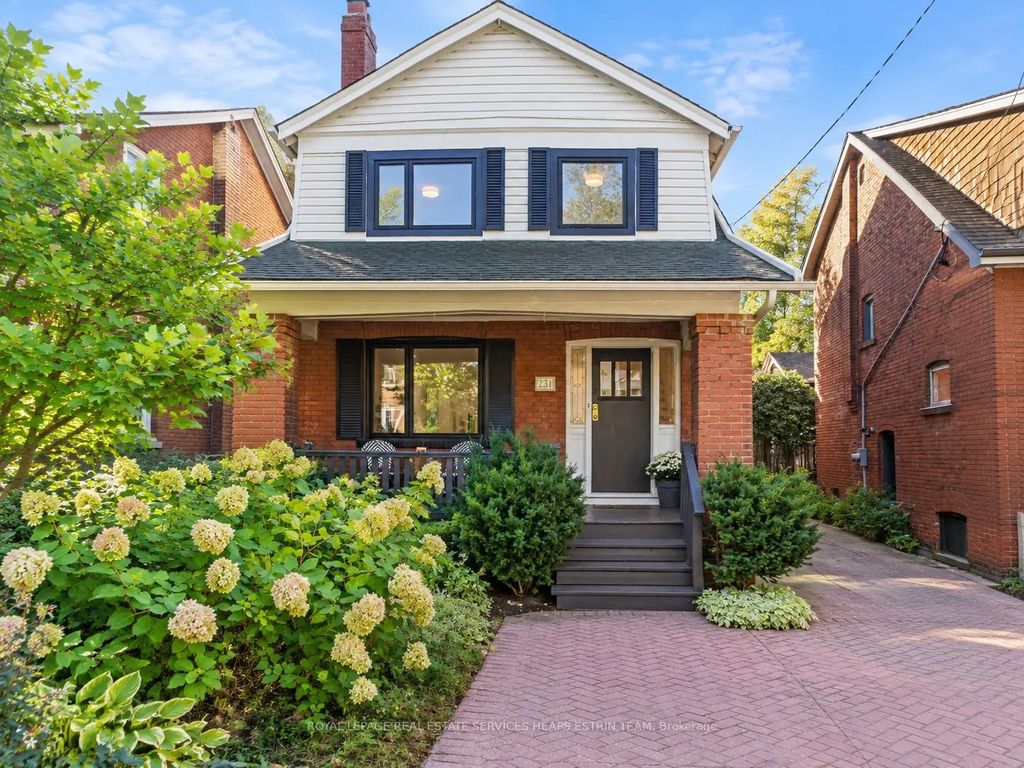
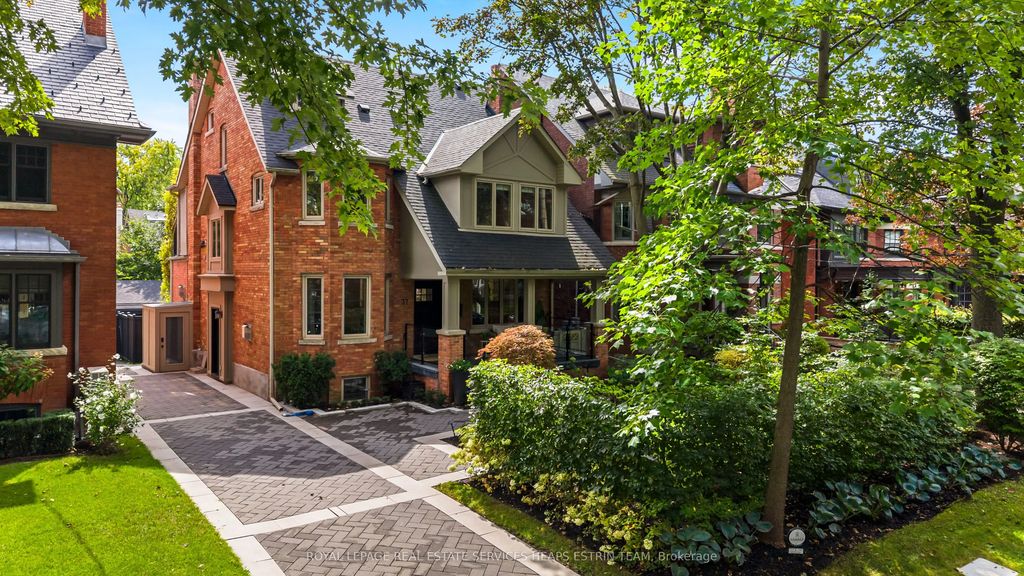
Rosedale holds some of the finest residential architecture in Canada. The housing stock reflects more than a century of building, with Victorian, Edwardian, Georgian Revival, and Tudor Revival homes sitting alongside one another, many of them on generous lots and many carrying heritage significance.
What distinguishes Rosedale from other established Toronto neighbourhoods is scale combined with individuality. These are not homes built to a pattern. Many were architect-designed for specific families, and the variety across a single street can be considerable. Grand detached homes dominate, though the neighbourhood also holds a smaller number of well-regarded low-rise condominium buildings and converted properties.
Renovation and restoration activity has been substantial over the past two decades, though it operates within real constraints. Heritage designations, ravine protection bylaws, and Toronto and Region Conservation Authority regulations all shape what can be altered, extended, or rebuilt. For many buyers this is part of the appeal, since it protects the character of the streetscape. For others it is a consideration to understand before purchasing.
The Rosedale Ravines
Rosedale's ravines are not a nearby amenity. They are the structure the neighbourhood was built around, and they shape daily life more than any other single feature.
The Rosedale Valley, the Vale of Avoca, and the Don Valley system all border or run through the area, and a significant number of homes back directly onto protected green space. Trails run through the ravines connecting north and south, and residents use them for walking, running, and cycling year-round. The tree canopy that the ravines support is why Rosedale feels cooler and quieter than its proximity to downtown would suggest.
For buyers, ravine lots carry a clear and durable premium. They also carry additional considerations around grade, drainage, tree protection, and what can be built, which are entirely manageable but worth understanding early.
Daily Life and Amenities in Rosedale
Rosedale is primarily residential, which is central to its character. There is no substantial commercial strip within the neighbourhood itself, and residents draw on the surrounding areas for daily needs.
That works well because of what surrounds it. Summerhill sits immediately to the northwest, with Summerhill Market and the shops along Yonge Street handling groceries, prepared food, and specialty needs. Yorkville is a short distance southwest for luxury retail, restaurants, and cultural institutions. The Rosedale subway station sits at the neighbourhood's western edge, and Sherbourne and Castle Frank stations serve the southern portion.
The practical result is a neighbourhood where you live quietly and step out into the city when you want it. For buyers who want to walk out their door into activity, Summerhill or Yorkville are better fits. For buyers who want the city accessible but not present, Rosedale is exactly right.
Schools in and Around Rosedale
Rosedale's school access is among the strongest in the city, spanning both public and independent options.
Public schools serving the area include:
- Rosedale Junior Public School (JK to Grade 6)
- Whitney Junior Public School (JK to Grade 6)
- Rosedale Heights School of the Arts (Grade 9 to Grade 12)
- Northern Secondary School (Grade 9 to Grade 12)
Independent and private schools in or near the neighbourhood include Branksome Hall (JK to Grade 12), The Rosedale Day School, Gradale Academy (K to Grade 6), The York School (JK to Grade 12), and Upper Canada College (JK to Grade 12).
Because catchment boundaries can shift, buyers making a decision primarily on school access should confirm current boundaries with the Toronto District School Board directly rather than relying on general assumptions about the area.
The Rosedale Market
Rosedale sits at the top tier of the Toronto market, and has for well over a century. Average home prices in the neighbourhood currently sit around $3.4 million, though that figure conceals enormous variation. A well-located heritage home on a substantial ravine lot can trade at a multiple of that, while smaller properties and condominium units sit considerably below it.
What drives value here is specific and worth understanding: lot size and frontage, ravine adjacency, architectural significance, the quality and sensitivity of any renovation, and the particular street. Rosedale's curving street pattern means that two homes a short walk apart can sit in quite different micro-markets.
Inventory is limited by the nature of the neighbourhood. It is fully built out, bounded by ravine, and heavily protected. Homes here also tend to be held for long periods, often by the same family across decades, which further constrains supply. Buyers should expect to wait for the right property, and sellers benefit from a buyer pool that is consistently larger than available inventory.
Rosedale is also a neighbourhood where a meaningful share of activity happens quietly. Not every property that trades reaches the open market, which is one of the reasons representation with genuine standing in the area matters here more than in most Toronto neighbourhoods. Our guide to how Toronto's luxury market works covers this dynamic in more detail.
Buying in Rosedale
Buyers should go in understanding that Rosedale purchases involve more due diligence than most. Heritage status, ravine protection, tree inventories, severance history, and conservation authority restrictions all bear on what a property can become, and they should be understood before an offer rather than discovered during a permit application.
Beyond the regulatory picture, the fundamentals matter enormously at this level. Lot quality, orientation, privacy, and the integrity of the original architecture tend to determine long-term value more than surface finishes. Our guide to what to look for when buying a luxury home in Toronto applies directly here, and the section on ravine properties is particularly relevant.
Patience is also part of the process. Rosedale inventory is limited, and the right home may not appear for months. Being genuinely prepared, with financing arranged and priorities clear, is what allows a buyer to act when it does.
Selling in Rosedale
Selling a Rosedale home is rarely a straightforward transaction. Many of these properties have been held for decades, sometimes across generations, and the sale often carries weight beyond the financial. Sellers here are frequently making a significant life transition rather than simply moving house.
The market rewards thoughtful positioning. What matters is identifying and leading with whatever genuinely distinguishes a property, whether that is ravine frontage, architectural provenance, lot size, or the quality of a restoration. Presentation matters disproportionately at this level, since buyers are comparing against other exceptional homes rather than average ones.
Our guides to preparing a home for a luxury sale and what changes at the top of the market both apply directly to Rosedale listings. For those selling a long-held family home as part of a broader transition, our guide to selling after decades in the same home speaks to that experience specifically.
Who Rosedale Suits
Rosedale works best for buyers who want architectural significance, genuine privacy, and ravine setting, and who value being close to the centre of the city without being in it. It suits families drawn to the concentration of strong schools, and buyers who intend to stay for a long time rather than trade in a few years.
It is less suited to buyers who want to walk out into a lively commercial strip, or who want a home they can freely reshape. The protections that preserve Rosedale's character do constrain what owners can do, and buyers should be comfortable with that trade rather than surprised by it.
Working With a Team That Knows Rosedale
Rosedale rewards specificity. Which street, which side of the ravine, what a given heritage designation actually permits, how a particular block has traded over the past decade. That is not information available from a listing portal, and in a neighbourhood where a meaningful share of activity happens privately, relationships matter as much as research.
The Heaps Estrin Team has worked in Rosedale for decades and has built its record almost entirely within Toronto's established neighbourhoods, including more than $5.5 billion in total sales volume over 25 years. If you are considering buying or selling here, we would be glad to talk it through with you. You can also explore current listings and neighbourhood information on our Rosedale community page.
Frequently Asked Questions
Is Rosedale considered part of Downtown Toronto?
Rosedale is not technically part of Downtown Toronto, yet it sits just minutes from the core, offering seamless access to Yorkville, the financial district, and the city's top amenities. It is usually considered part of Central Toronto, and is best defined by its balance: an established, prestigious neighbourhood of quiet tree-lined streets and heritage homes, all within reach of downtown.
What is the average price of a home in Rosedale?
While these numbers fluctuate depending on market conditions and property type, the average price of a home in Rosedale currently sits around $3.4 million. That figure conceals considerable variation, as heritage homes on substantial ravine lots can trade well above it while smaller properties and condominium units sit below.
Why is this area called Rosedale?
Rosedale takes its name from the abundance of wild roses that once grew throughout the area's rolling hills and valleys. When the neighbourhood was first developed in the nineteenth century, its natural landscape, particularly the rose-filled ravines, inspired the name, reflecting both its beauty and its connection to nature that still defines the community today.
Is Rosedale a good neighbourhood for families?
Rosedale is one of Toronto's most sought-after neighbourhoods for families, offering quiet tree-lined streets, an exceptional concentration of public and independent schools, and access to the city's ravine system. Its strong sense of community, combined with close proximity to downtown, creates a balanced and highly desirable family lifestyle.
What kind of architecture is Rosedale known for?
Rosedale holds some of Canada's finest residential architecture, with Victorian, Edwardian, Georgian Revival, and Tudor Revival homes sitting alongside one another. Many were architect-designed for individual families rather than built to a pattern, which produces considerable variety even within a single street. A significant number carry heritage designation.
What should I know about ravine properties in Rosedale?
Ravine lots carry a clear and durable premium in Rosedale, offering privacy and mature canopy that cannot be replicated elsewhere. They also involve additional considerations including Toronto and Region Conservation Authority regulations, tree protection bylaws, and grade and drainage factors. None of this is prohibitive, but it should be understood before making an offer.
Why is there so little inventory in Rosedale?
The neighbourhood is fully built out, bounded by protected ravine, and heavily governed by heritage and conservation protections, so there is no meaningful development pipeline. Homes here also tend to be held for long periods, often across generations, which further constrains supply. Buyers should expect to wait for the right property.
Posted by The Heaps Estrin Team onEnjoy this blog post? Click here to subscribe for updates
Leave A Comment