

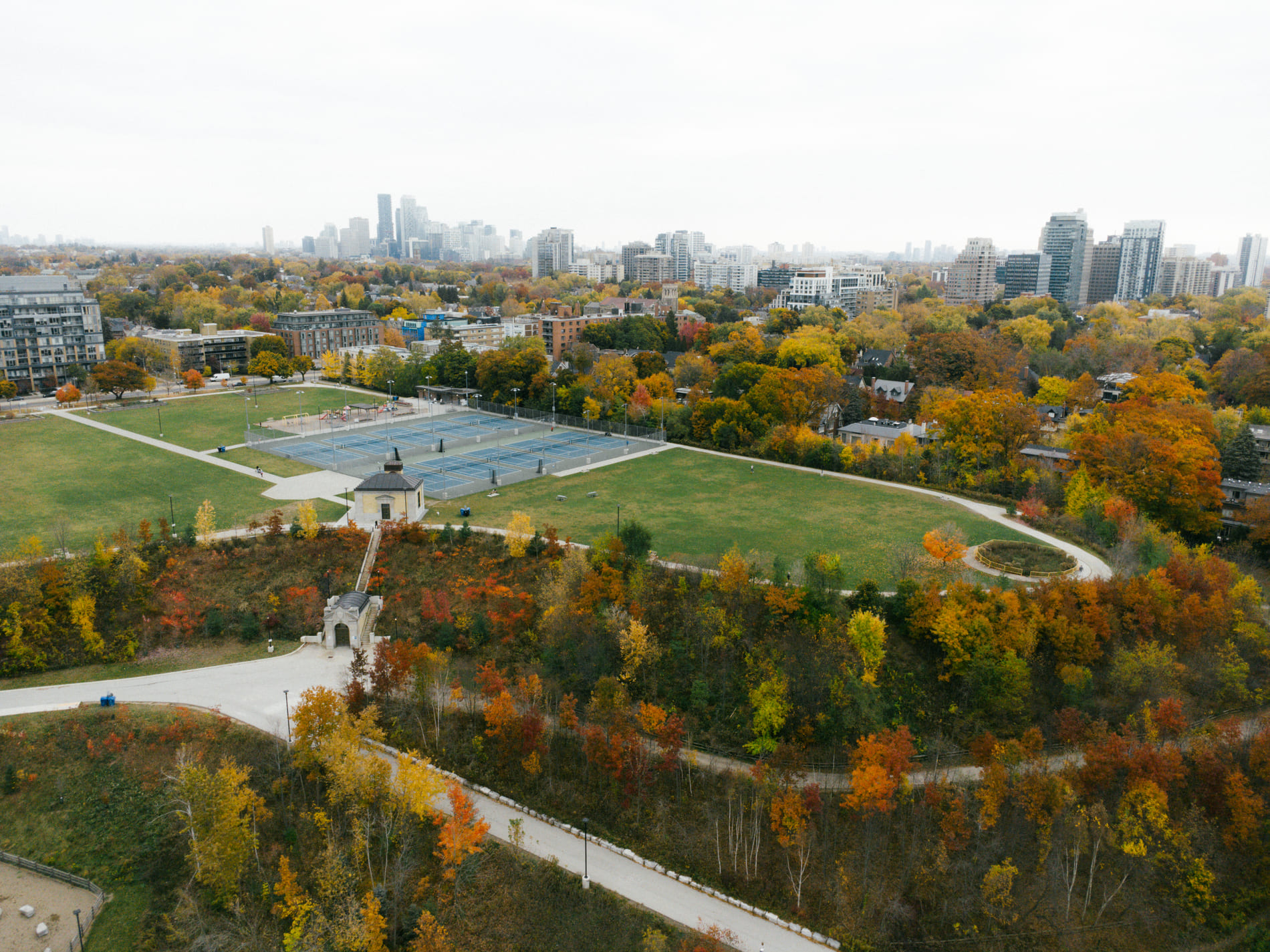
Rosedale and Moore Park sit adjacent to one another in central Toronto, share a ravine system, and hold similar heritage housing stock. For buyers drawn to established architecture, generous lots, and genuine quiet close to the city centre, they are natural alternatives to weigh against each other. The differences are real, and they matter. Here is how the two compare.
Rosedale vs Moore Park at a glance
- Price: Rosedale is more expensive, averaging around $3.4 million. Moore Park trades below it while carrying a premium over most of midtown.
- Architecture: Rosedale offers more variety and more heritage-designated homes. Moore Park is more consistent, shaped by its planned development.
- Quiet: Both are quiet. Moore Park is quieter, with fewer entry points and almost no through traffic.
- Amenities: Rosedale has the edge, with Yorkville and Summerhill nearby. Neither has a commercial strip of its own.
- Schools: Largely shared, so the decision usually comes down to price, lot, and architecture rather than schooling.
The Short Answer
Rosedale is larger, more architecturally significant, closer to Yorkville, and priced at the top of the Toronto market. It suits buyers who want the most distinguished residential address in the city and are prepared to pay for it.
Moore Park is smaller, quieter still, bounded by cemetery and ravine, and generally more accessible on price. It suits buyers drawn to Rosedale's qualities who would rather have more house and lot for the money than the address itself.
Both are excellent. For many buyers the decision comes down to whether architectural provenance and prestige are worth the premium, or whether value and quiet matter more.
Search Moore Park Listings

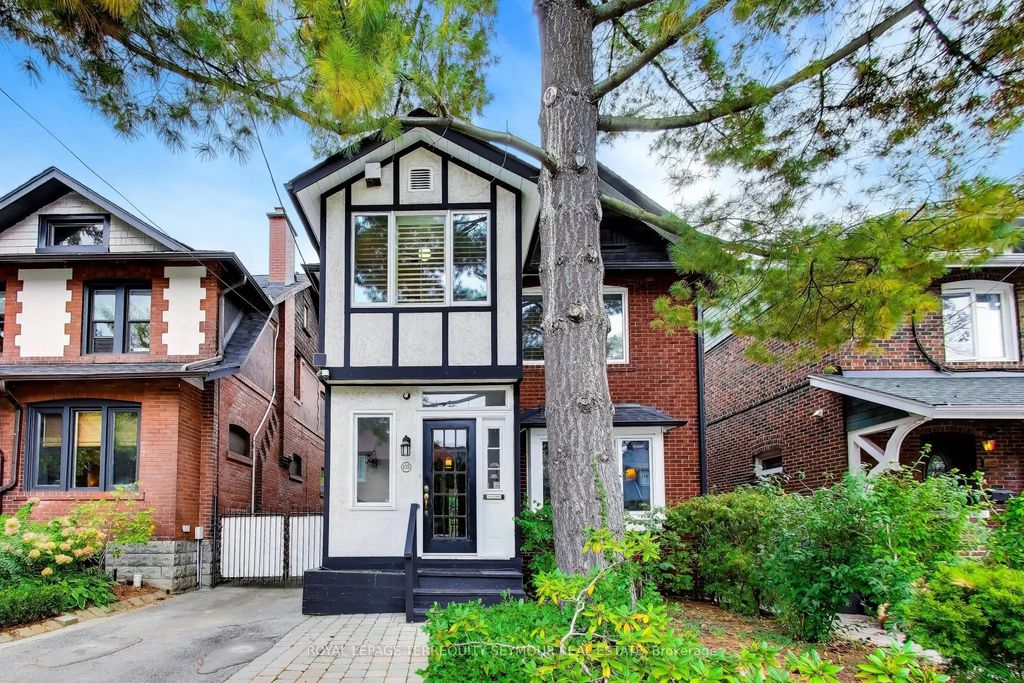
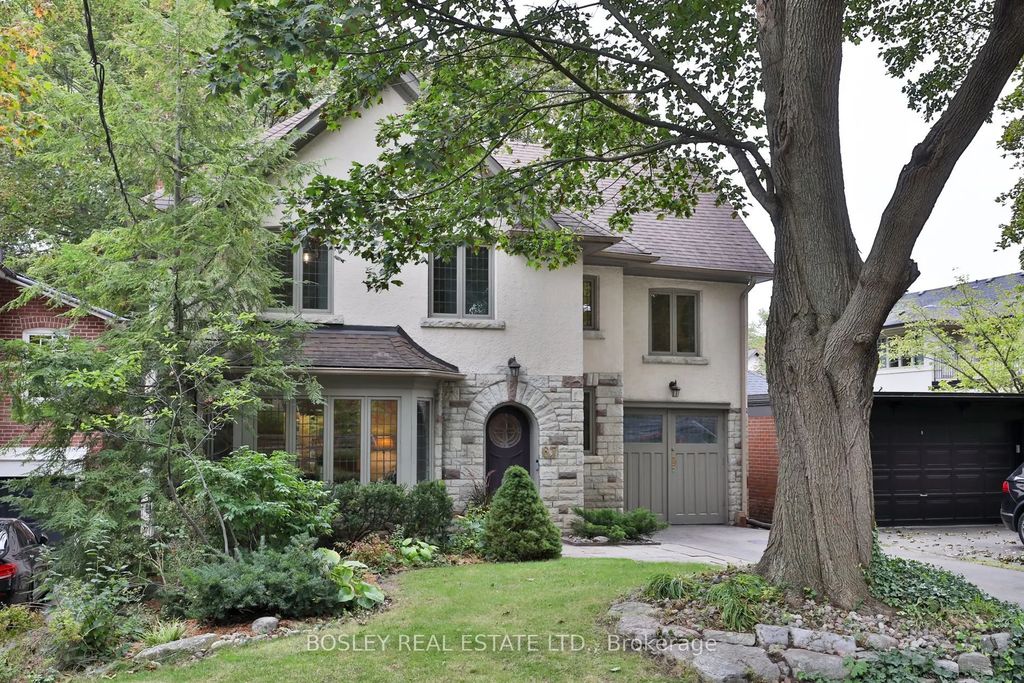
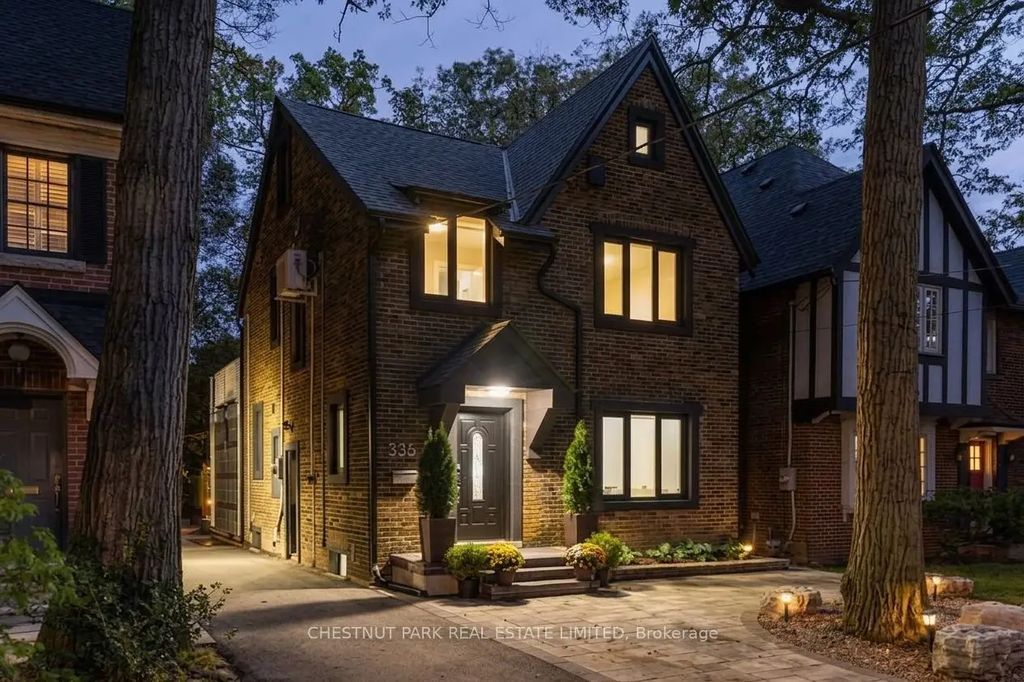
Geography and Setting: Rosedale vs Moore Park
Rosedale is the larger of the two, spanning a substantial area north and east of Yorkville, bounded by the Rosedale Valley to the south and the Don Valley to the east. Its streets curve to follow the original ravine topography, which is why the neighbourhood feels labyrinthine to visitors and why through traffic is minimal.
Moore Park is more compact, bounded by Mount Pleasant Cemetery to the west and south and the Moore Park Ravine to the east. That geography leaves very few entry points, and the practical result is a neighbourhood with even less through traffic than Rosedale, which is saying something.
Both are genuinely quiet. If anything Moore Park is quieter, simply because it is smaller and has fewer ways in.
Architecture in Rosedale and Moore Park
This is where the clearest distinction lies.
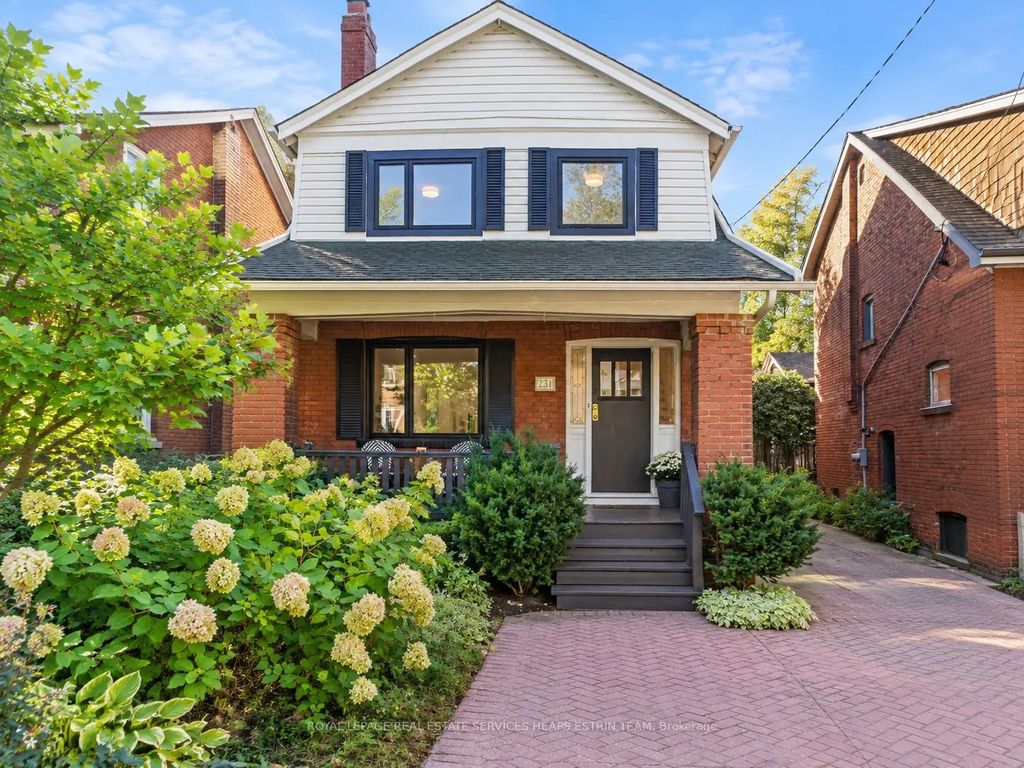
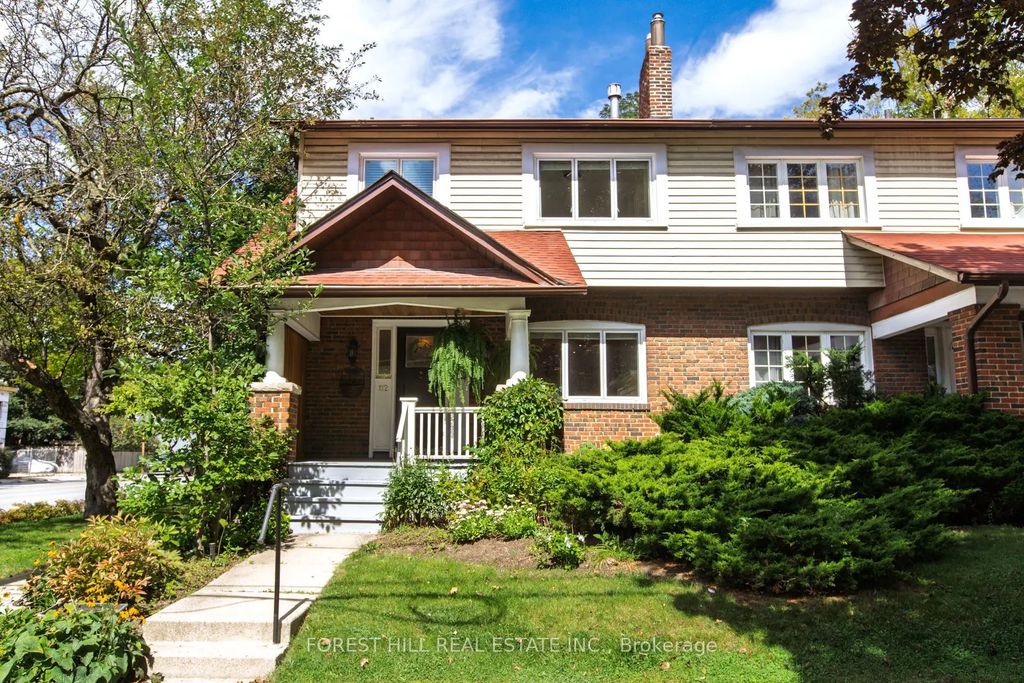
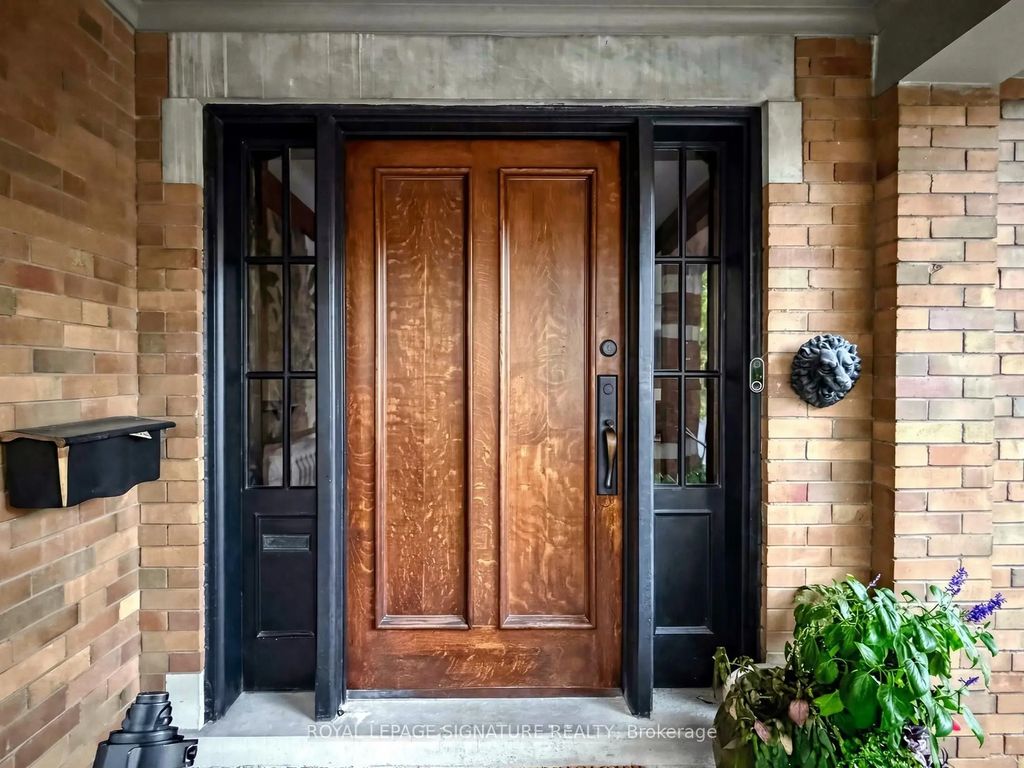
Rosedale holds some of the finest residential architecture in Canada, with Victorian, Edwardian, Georgian Revival, and Tudor Revival homes across more than a century of building. Many were architect-designed for individual families rather than built to a pattern, and a significant number carry heritage designation. The variety within a single Rosedale street can be considerable, and the scale of the largest homes is not matched elsewhere in central Toronto.
Moore Park is more consistent and somewhat later. Laid out in the 1880s and 1890s by developer John T. Moore as a planned community, it is dominated by early twentieth century Edwardian, Georgian Revival, and Tudor Revival homes in brick and stone. The streetscape reads as more coherent than Rosedale's, which some buyers prefer and others find less interesting.
Both neighbourhoods hold substantial restored properties, and in both the gap between an original home and a properly restored one is significant.
Lots and Green Space in Both Neighbourhoods
Both neighbourhoods offer generous lots by central Toronto standards, and both have genuine ravine frontage available on their eastern edges.
Rosedale's relationship to its ravines is more extensive. The Rosedale Valley, the Vale of Avoca, and the Don Valley system all border or run through the area, and a significant number of homes back onto protected green space.
Moore Park has a different arrangement worth understanding. The Moore Park Ravine runs along its eastern edge, and Mount Pleasant Cemetery, which functions as a Victorian arboretum with a designated tree collection and paths residents use daily, wraps the western and southern boundaries. The neighbourhood is effectively bounded by green space on multiple sides, which is unusual even by Toronto standards.
For pure lot size relative to price, Moore Park frequently offers more. For the most substantial estate-scale properties in central Toronto, Rosedale is where they are.
Amenities and Walkability in Rosedale and Moore Park
Neither neighbourhood has a commercial strip within it, which is central to the character of both.
Rosedale draws on Summerhill to the northwest for groceries and everyday needs, and Yorkville to the southwest for luxury retail, dining, and cultural institutions. The Rosedale, Sherbourne, and Castle Frank subway stations serve different parts of the neighbourhood.
Moore Park draws on St. Clair Avenue East immediately south, the Yonge and St. Clair corridor to the southwest, or Bayview Avenue in Leaside to the northeast. Transit access runs primarily via St. Clair.
Rosedale has the edge here, mainly because Yorkville's proximity is difficult to match. For buyers who value walking to serious retail and restaurants, that gap is meaningful.
Schools Serving Rosedale and Moore Park
Both neighbourhoods sit within a strong concentration of public and independent schools, and there is considerable overlap.
Rosedale is served by Rosedale Junior Public School, Whitney Junior Public School, Rosedale Heights School of the Arts, and Northern Secondary School, with Branksome Hall, The Rosedale Day School, Gradale Academy, The York School, and Upper Canada College among the independent options.
Moore Park draws on Whitney Junior Public School, Deer Park Junior and Senior Public School, Rosedale Heights School of the Arts, and Northern Secondary School, with Branksome Hall, Upper Canada College, The York School, and Greenwood College School nearby.
Families choosing between the two are largely not choosing between different school outcomes, which tends to push the decision toward price, lot, and architecture instead. Buyers deciding primarily on catchment should confirm current boundaries with the Toronto District School Board, particularly in Moore Park where the neighbourhood sits near several catchment edges.
Market and Price: How Rosedale and Moore Park Compare
Rosedale sits at the top tier of the Toronto market, with average home prices currently around $3.4 million and substantial variation above that for heritage properties on significant ravine lots.
Moore Park generally trades below Rosedale while carrying a clear premium relative to most of midtown. For many buyers this positioning is the entire appeal: similar housing stock, similar ravine setting, similar quiet, at a meaningfully more accessible entry point.
Both markets are supply-constrained. Both neighbourhoods are fully built out, bounded by protected land, and subject to heritage and conservation restrictions. Homes in both are frequently held for decades. Buyers in either should expect a patient search rather than a broad selection.
One further consideration: in Rosedale particularly, a meaningful share of activity happens quietly rather than on the open market. Our guide to how Toronto's luxury market works covers that dynamic in more detail.
Which Neighbourhood Fits You
Rosedale is likely the better fit if architectural significance and provenance matter to you, you want the most distinguished address in the city, walking proximity to Yorkville appeals, or you are looking at the estate end of the central Toronto market where Rosedale has few genuine rivals.
Moore Park is likely the better fit if you want more lot and house for the money, you value quiet above almost everything, you like the idea of being bounded by ravine and arboretum on multiple sides, or you admire Rosedale but would rather not pay the premium the address commands.
Many buyers seriously considering one look at both, which is entirely sensible. They are adjacent, they share a ravine system and much of their school access, and they differ enough that the choice genuinely matters.
Getting the Decision Right
The most useful thing a buyer can do is walk both, ideally at the same time of day, and pay attention to how each feels rather than how each looks in photographs. Rosedale's curving streets and Moore Park's cemetery-and-ravine boundaries produce quite different experiences of the same general idea.
Lot quality, orientation, and architectural integrity should also weigh heavily in any comparison at this level, and our guide to what to look for when buying a luxury home in Toronto covers those fundamentals in detail.
Our team works across both neighbourhoods and the broader central Toronto corridor. If you are weighing one against the other, we would be glad to help you think it through.
Frequently Asked Questions
Which is more expensive, Rosedale or Moore Park?
Rosedale is generally more expensive, sitting at the top tier of the Toronto market with average prices currently around $3.4 million. Moore Park trades below Rosedale while still carrying a premium relative to most of midtown, which makes it appealing to buyers drawn to similar housing stock and setting at a more accessible entry point.
Are Rosedale and Moore Park adjacent?
Yes. Moore Park sits immediately northeast of Rosedale, and both border the same broader ravine system. They share much of their school access and a similar quiet, residential character, which is why buyers frequently consider them together.
Which neighbourhood has better architecture?
Rosedale holds some of the finest residential architecture in Canada, with more variety and a higher concentration of architecturally significant and heritage-designated homes. Moore Park is more consistent, dominated by early twentieth century Edwardian, Georgian Revival, and Tudor Revival homes from its planned development. Which is preferable depends on whether you value variety and provenance or streetscape coherence.
Which is quieter, Rosedale or Moore Park?
Both are genuinely quiet, but Moore Park is quieter still. It is smaller, bounded by Mount Pleasant Cemetery and the Moore Park Ravine, and has very few entry points, which means almost no through traffic.
Do Rosedale and Moore Park share schools?
Largely, yes. Both draw on Whitney Junior Public School, Rosedale Heights School of the Arts, and Northern Secondary School, and both sit within reach of Branksome Hall, Upper Canada College, and The York School. Families choosing between the two are generally not choosing between different school outcomes.
Which has better access to shops and restaurants?
Rosedale, primarily because of Yorkville's proximity to its southwestern edge, along with Summerhill for everyday needs. Moore Park relies on St. Clair Avenue East, the Yonge and St. Clair corridor, or Bayview Avenue in Leaside. Neither neighbourhood has a commercial strip within it.
Posted by The Heaps Estrin Team onEnjoy this blog post? Click here to subscribe for updates
Leave A Comment