

Leaside is one of Toronto's most consistently sought-after family neighbourhoods, and for reasons that reveal themselves slowly rather than all at once. It is not the flashiest part of the city, nor the most historic, nor the most obviously exclusive. What it offers instead is something harder to manufacture: wide tree-lined streets, genuinely strong schools, a real high street, and a community that people move into and then simply do not leave. This guide covers what living in Leaside is actually like, what the market looks like, and what buyers and sellers should understand about one of midtown Toronto's most enduring neighbourhoods.
Where Leaside Is and How It Is Laid Out
Leaside sits in midtown Toronto, bounded roughly by Eglinton Avenue East to the north, the Don Valley to the west and south, and Laird Drive and the rail corridor to the east. Bayview Avenue runs through its heart and functions as the neighbourhood's spine, both commercially and socially.
Locals tend to divide the area informally. South Leaside sits below Millwood Road and generally carries the higher price point, with proximity to the ravine and the older, more established streets. North Leaside runs up toward Eglinton and offers a slightly different mix of housing stock and, in many cases, larger lots. Bennington Heights is a distinct pocket to the southwest, often grouped with Leaside in conversation but genuinely its own place.
These distinctions matter more than they might appear. Two homes at similar price points on either side of Millwood can offer meaningfully different daily lives, and buyers unfamiliar with the area often underestimate how much the specific pocket shapes both value and lifestyle.
A Brief History
Leaside was planned rather than accumulated, which explains a great deal about how it feels today. Laid out in the early twentieth century as a planned community, it was designed with wide streets, generous setbacks, and a coherent street grid rather than the organic sprawl that shaped other parts of the city.
That planning has aged remarkably well. The mature tree canopy that defines Leaside today exists because the original layout made room for it. The walkability exists because the commercial strip was integrated into the residential fabric rather than pushed to an arterial edge. Much of what buyers respond to in Leaside is the result of decisions made a century ago.
Housing Stock and Architecture
Leaside is overwhelmingly a neighbourhood of detached single-family homes, with a strong base of original 1930s and 1940s construction. Tudor, Colonial, and traditional brick homes dominate the older streets, many of them built with a level of craftsmanship and material quality that is difficult and expensive to replicate.
Alongside that original stock sits a substantial and growing inventory of renovated and rebuilt homes. Over the past two decades, Leaside has seen extensive back-to-the-studs renovations, second-storey additions, and full custom builds. The result is a streetscape where an original 1940s home might sit beside a contemporary new build, and both feel appropriate.
Lot sizes are generally larger than in comparable midtown neighbourhoods, with most homes on 30 to 40 foot frontages and rear yards deep enough for established trees and genuine family use. Streets closer to the Don Valley and Sunnybrook Park trade at a premium for ravine access and lot depth.
Bayview Avenue and Daily Life
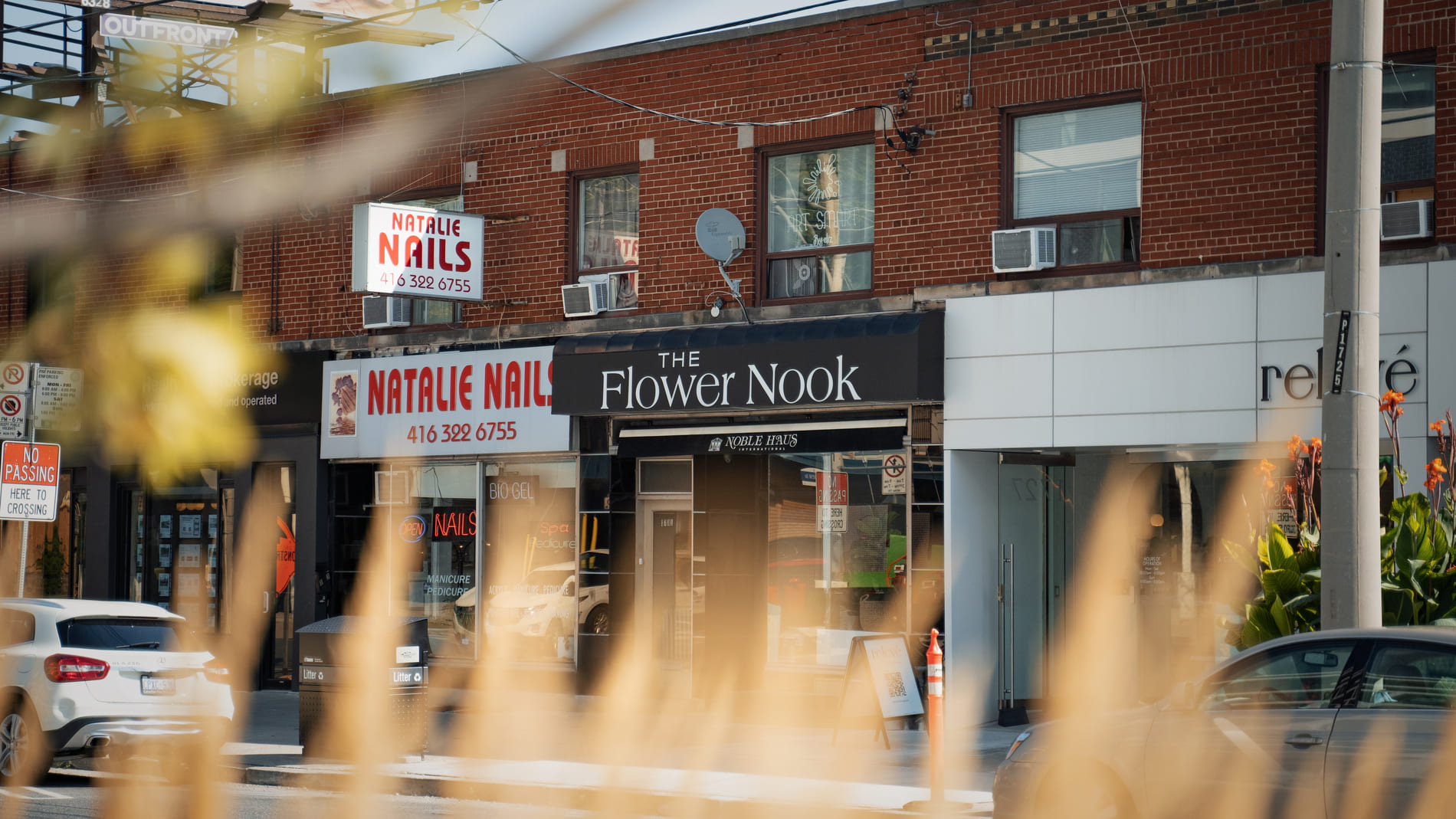
Bayview Avenue between Eglinton and Moore is what makes Leaside function as a neighbourhood rather than a subdivision. It is a genuine high street, with independent retailers, cafes, restaurants, and everyday amenities that residents actually use rather than drive past.
Hollywood Gelato draws a line down the sidewalk on warm summer evenings. Cumbrae's handles more weeknight dinners in this neighbourhood than anyone would admit to. The mix of longstanding local businesses and newer arrivals gives the strip a character that has held up even as the surrounding market has moved considerably upmarket.
This is worth emphasizing for buyers coming from other parts of the city or from outside Toronto entirely. A great deal of Leaside's appeal comes down to the fact that daily life happens within walking distance. Groceries, coffee, dinner, the pharmacy, the hardware store. It is a neighbourhood you can live in without constantly getting into a car.
Parks, Recreation, and the Ravine
Trace Manes Park sits just east of Bayview and functions as the community's central gathering point. It holds tennis courts, a library branch, an outdoor rink in winter, and some of the most active community programming in the city. On a Saturday morning in any season, it is the clearest single expression of what Leaside is.
Leaside Memorial Community Gardens provides year-round recreational facilities including arenas, a swimming pool, and organized sports programs. The neighbourhood's youth hockey, soccer, and tennis programs are notably strong, and for many families they become the organizing structure of the week.
Beyond the built recreation, Leaside's eastern and southern edges open onto Serena Gundy Park, Sunnybrook Park, and the broader Don Valley trail system. This is one of the neighbourhood's genuinely distinguishing features. Residents have immediate access to one of Toronto's largest continuous green corridors, and commuting downtown by bike via the Lower Don Trail is a realistic option rather than a theoretical one.
Schools in and Around Leaside
School catchments are among the strongest drivers of Leaside's market, and the neighbourhood's reputation here is well earned. Public schools serving the area include:
- Bessborough Drive Elementary and Middle School (JK to Grade 8)
- Rolph Road Elementary School (JK to Grade 6)
- Bennington Heights Elementary School (JK to Grade 6)
- Northlea Elementary and Middle School (JK to Grade 8)
- Leaside High School (Grade 9 to Grade 12)
Leaside's central position also puts several leading independent schools within convenient reach, including Crestwood School, Crescent School, Havergal College, and St. Clement's School.
For families, the practical effect is continuity. Children can move from elementary through secondary within the same community, with the same peer group, walking rather than commuting. That continuity is a significant part of why families who arrive in Leaside tend to stay.
Transit and Getting Around
Leaside is served by the Eglinton Crosstown LRT to the north, which has meaningfully improved east-west connectivity across midtown. Bayview and Laird both carry frequent bus service connecting south to the Bloor-Danforth line and north to Eglinton.
For drivers, access to the Don Valley Parkway is direct, putting downtown, the airport corridor, and points north within practical reach. The combination of genuine walkability locally and strong regional connectivity is unusual, and it is part of why the neighbourhood holds appeal across a wide range of household types.
Sunnybrook Health Sciences Centre sits immediately adjacent, which matters both for medical access and as a significant local employer. The Shops at Don Mills are a short drive east for larger retail needs.
The Leaside Real Estate Market
Leaside has matured over the past two decades from what was once considered a solid family neighbourhood into one of central Toronto's strongest established family-luxury markets. Prices reflect that shift, and the neighbourhood now competes directly with areas that would once have been considered a tier above it.
The market here is characterized by informed, motivated buyers. Leaside attracts people who have researched carefully, understand what they want, and are often trading up from within the neighbourhood or moving in from a nearby area with a clear sense of what they are buying. That tends to produce efficient transactions where well-presented, correctly priced homes perform strongly.
To give a sense of the current landscape, the Heaps Estrin Team completed 57 transactions in Leaside in 2025, with a highest sale of $4,505,000, an average sale-to-list ratio of 99.2%, and a fastest transaction of two days. Those numbers describe a market that moves decisively when a home is right.
Variation within the neighbourhood is significant. A fully renovated home and an original-condition home on the same street can sit far apart in price, and lot depth, ravine adjacency, and walking distance to Bayview all factor heavily into value. Understanding those distinctions is where local knowledge earns its place.
Buying in Leaside
Buyers should go in understanding that the gap between renovated and original homes is substantial, and that renovation costs in this neighbourhood are real. An original 1940s home with excellent bones can be an outstanding long-term purchase, but the work required to modernize it should be understood before an offer, not after.
The pocket matters too. South Leaside, North Leaside, and the streets bordering Bennington Heights each carry distinct character and price profiles even though they are often discussed as a single market. Working with someone who tracks Leaside transactions block by block makes a meaningful difference here, and many of the broader principles in our guide to what to look for when buying a luxury home in Toronto apply directly.
Selling in Leaside
Leaside's buyer pool is concentrated, well-informed, and highly attuned to value, which means sellers benefit from accuracy and strong presentation rather than ambitious positioning. The market rewards homes that are presented honestly and priced to reflect what they genuinely are.
What tends to matter most in positioning is whatever makes a specific property distinct: a ravine lot, a wide frontage, a recent high-end renovation, or walking proximity to a particular school. Identifying and leading with that difference is where a sale is won. Our guides to preparing a home for sale and timing the Toronto market both apply directly to Leaside listings.
Who Leaside Suits
Leaside works best for families who want the trade-off it offers: genuine walkability and community in exchange for a midtown rather than downtown address. It suits people who want their children to walk to school, who value a real high street over a shopping centre, and who want ravine access without leaving the city.
It is less obviously suited to buyers looking for an estate lot, a heritage streetscape, or a downtown lifestyle. Those preferences point toward other neighbourhoods entirely, and part of good guidance is being clear about that.
Working With a Team That Knows Leaside
The Heaps Estrin office sits at 1391 Bayview Avenue, in the heart of the neighbourhood. Many members of our team live here, raise their families here, and shop the same stretch of Bayview as our clients. That is not a marketing position, it is simply where we are.
What it means practically is that our knowledge of Leaside is granular rather than general. We know which streets hold value, how the pockets differ, what a given renovation is likely to have cost, and how a specific block has traded over the past several years. For a neighbourhood where the differences between streets are this meaningful, that specificity matters.
If you are considering buying or selling in Leaside, we would be glad to talk it through with you. You can also explore our Leaside community page for current listings and market information.
Frequently Asked Questions
What is Leaside known for?
Leaside is known for wide tree-lined streets, strong public and private school catchments, generous lot sizes for a midtown neighbourhood, and Bayview Avenue as a genuine neighbourhood high street. It also offers direct access to the Don Valley ravine and trail system, and has one of the most active community programs in the city.
Is Leaside a good neighbourhood for families?
Yes, and it is one of the reasons the neighbourhood consistently holds its value. Leaside offers strong schools from elementary through secondary within the same community, extensive youth sports and recreation programming through Leaside Memorial Community Gardens and Trace Manes Park, and quiet residential streets. Many families move in and remain for decades.
What kinds of homes are in Leaside?
Leaside is primarily a neighbourhood of detached single-family homes, with a strong base of original 1930s and 1940s Tudor, Colonial, and traditional brick construction. Alongside that sits a substantial inventory of fully renovated homes and contemporary custom builds. Lot sizes are generally larger than in comparable midtown neighbourhoods.
Is Leaside walkable?
Yes. Bayview Avenue between Eglinton and Moore contains the neighbourhood's main shopping and dining district, and most homes sit within a short walk of independent retailers, cafes, schools, parks, and the Don Valley trail system. The neighbourhood is also served by the Eglinton Crosstown LRT to the north.
What is the difference between South Leaside and North Leaside?
South Leaside sits below Millwood Road and generally carries a higher price point, with proximity to the ravine and older established streets. North Leaside runs toward Eglinton and offers a different mix of housing stock, often with larger lots. The distinction matters for both value and daily lifestyle, and buyers unfamiliar with the area frequently underestimate it.
How competitive is the Leaside market?
Leaside attracts informed, motivated buyers, which tends to produce efficient transactions where well-presented and correctly priced homes perform strongly. In 2025, the Heaps Estrin Team completed 57 Leaside transactions with an average sale-to-list ratio of 99.2% and a fastest sale of two days.
Posted by The Heaps Estrin Team onEnjoy this blog post? Click here to subscribe for updates
Leave A Comment