

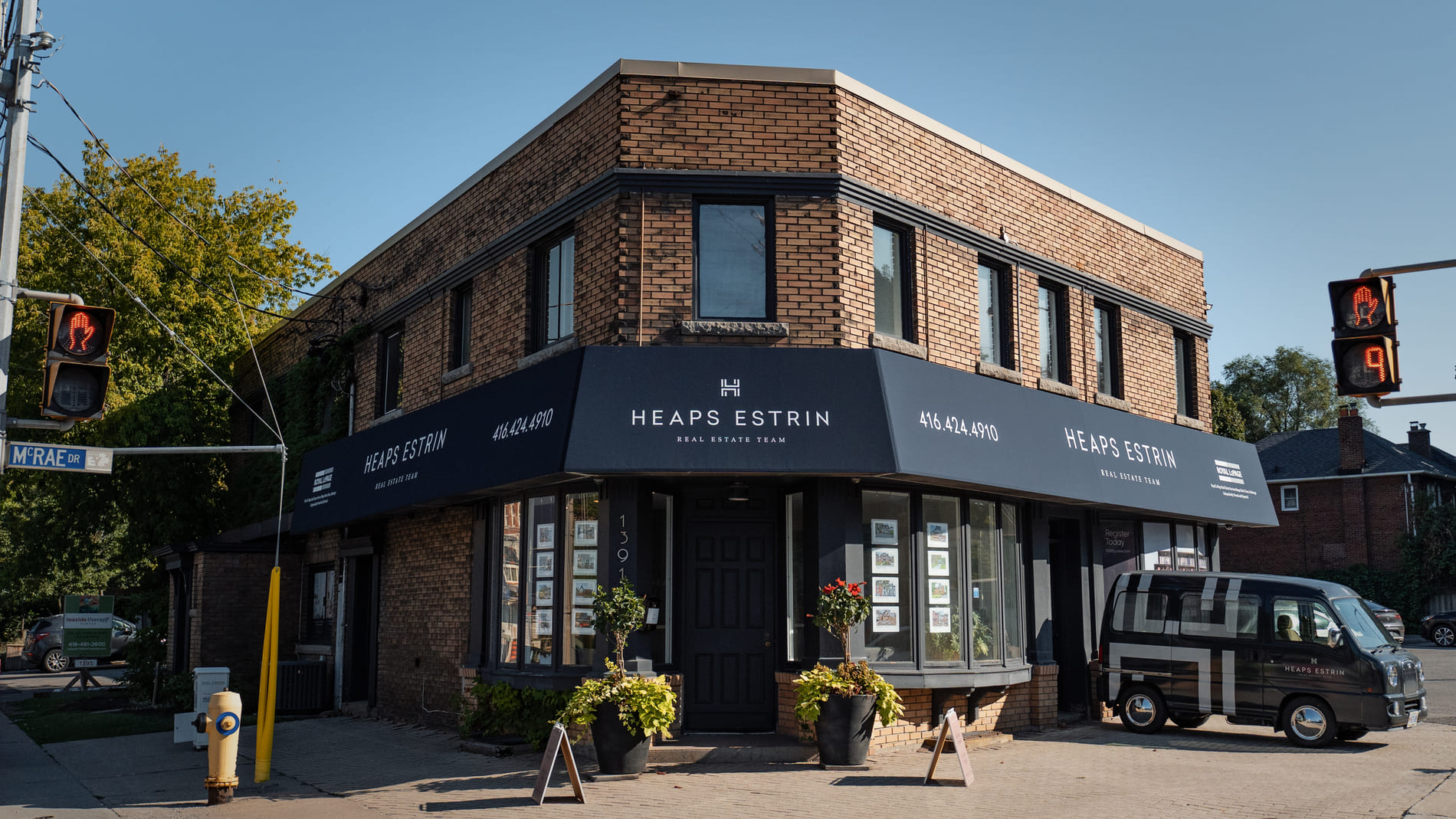
Leaside is one of the more straightforward Toronto neighbourhoods to fall in love with and one of the trickier ones to buy in well. The market is competitive, informed, and full of homes that look similar on a listing page but differ substantially in value. This guide covers what buyers should understand before making an offer, from pocket differences and renovation realities to how the market actually behaves.
Understand the Pockets Before You Search
The single most common mistake buyers make in Leaside is treating it as one market. It is not. The neighbourhood divides informally, and those divisions carry real weight in both price and daily experience.
South Leaside, below Millwood Road, generally carries the higher price point. The streets are older and more established, and proximity to the ravine and to the southern stretch of Bayview supports value.
North Leaside, running up toward Eglinton, offers a different mix of housing stock and frequently larger lots. It has benefited meaningfully from the Eglinton Crosstown LRT.
The streets bordering Bennington Heights take on some of that neighbourhood's quieter, more ravine-adjacent character, and often price accordingly.
Two homes at similar asking prices in different pockets can represent quite different value. Understanding which pocket a listing sits in, and what that pocket has been trading at, is the foundation of buying well here.
The Renovated Versus Original Gap
Leaside's housing stock is largely 1930s and 1940s construction, which means most homes on the market fall somewhere on a spectrum from entirely original to fully rebuilt. The price gap between those two ends is substantial, and understanding where a given home sits on that spectrum is critical.
An original-condition home with strong bones can be an excellent long-term purchase. The construction quality of that era is genuinely good, ceiling heights and proportions are often better than in newer builds, and there is real room to add value. But the cost of modernizing should be understood before an offer, not discovered afterward. Kitchens, bathrooms, electrical, plumbing, windows, and insulation all add up quickly in a home of this age.
Equally, a recently renovated home carries a premium, and buyers should assess the quality of that work rather than assuming it. Cosmetic renovation and structural renovation are different things, and they are not always easy to tell apart during a showing. Many of the evaluation principles in our guide to what to look for when buying a luxury home in Toronto apply directly here.
What Actually Drives Value in Leaside
Beyond condition and pocket, a handful of factors do most of the work in determining what a Leaside home is worth:
- Lot depth and frontage. Leaside lots are generally larger than comparable midtown neighbourhoods, and the variation between them matters. Depth in particular supports both current use and future potential.
- Ravine adjacency. Homes backing onto or near the Don Valley system carry a clear premium, and that premium tends to hold well over time.
- Walking distance to Bayview. Proximity to the commercial strip is one of the most consistent drivers of value in the neighbourhood, because walkability is central to why people choose Leaside.
- School proximity. Walking distance to a specific school is a genuine value factor here, not a soft preference.
- Street character. Traffic volume, canopy maturity, and the general condition of neighbouring homes all influence value more than buyers new to the area typically expect.
Schools and How They Shape a Search
For most Leaside buyers, schools are not one consideration among many. They are the reason for the search.
Public catchments include Bessborough Drive Elementary and Middle School, Rolph Road Elementary School, Bennington Heights Elementary School, and Northlea Elementary and Middle School, feeding into Leaside High School. Several independent schools sit within convenient reach, including Crestwood School, Crescent School, Havergal College, and St. Clement's School.
Catchment boundaries can and do shift, so buyers making a decision primarily on school access should confirm current boundaries with the Toronto District School Board directly rather than relying on a listing description or a general assumption about the area. It is a small step that prevents a significant disappointment.
How the Market Behaves
Leaside attracts informed buyers. Many are trading up from within the neighbourhood, moving in from an adjacent area, or have been watching the market for months before they engage. The practical effect is that well-presented, correctly priced homes tend to move efficiently, and that overpriced homes tend to sit visibly.
To give a sense of the recent market, the Heaps Estrin Team completed 57 Leaside transactions in 2025, with a highest sale of $4,505,000, an average sale-to-list ratio of 99.2%, and a fastest transaction of two days. That is a market where good homes do not wait long and where accurate pricing is rewarded on both sides.
For buyers, this means readiness matters. Having financing arranged, priorities defined, and an agent who can move quickly is what allows you to act when the right home appears rather than watching it go. Our guide to timing the Toronto market covers the broader seasonal picture, though in Leaside specifically, readiness tends to matter more than season.
Practical Advice for Leaside Buyers
Walk the streets, not just the listings. Leaside's differences are street-level. A weekday evening walk through a few candidate blocks will tell you things no listing photograph will.
Visit at different times. Traffic on some streets is noticeably different at school pickup than at midday. Worth knowing before you commit.
Look at the neighbours. In a neighbourhood with this much renovation activity, understanding what is happening on either side of a home matters, both for immediate disruption and for long-term street value.
Get the inspection right. With housing stock of this age, a thorough inspection is not a formality. Ask specifically about electrical, plumbing, foundation, and insulation.
Be honest about renovation appetite. Many buyers underestimate both the cost and the disruption of renovating while living in a home. Deciding this before you search saves considerable time.
Working With Someone Who Knows the Blocks
Almost everything above comes down to granularity. Which pocket, which street, which side of the street, what the neighbours are doing, what similar homes actually sold for rather than what they listed at. That is not information available from a listing portal.
The Heaps Estrin office sits at 1391 Bayview Avenue, in the heart of the neighbourhood, and many of our team live here. Our knowledge of Leaside is block by block rather than general, which in a market where the differences between streets are this meaningful is exactly what a buyer needs.
If you are considering a purchase in Leaside, we would be glad to help you think it through. You can also browse current listings and neighbourhood information on our Leaside community page.
Frequently Asked Questions
How much does a home in Leaside cost?
Prices vary considerably depending on pocket, condition, and lot. The gap between an original-condition home and a fully renovated one on the same street can be substantial. As a reference point, the Heaps Estrin Team's highest Leaside transaction in 2025 was $4,505,000, across 57 transactions in the neighbourhood that year.
What is the difference between South Leaside and North Leaside?
South Leaside sits below Millwood Road and generally carries a higher price point, with older established streets and proximity to the ravine. North Leaside runs toward Eglinton with a different mix of housing stock, frequently larger lots, and the benefit of the Eglinton Crosstown LRT. The distinction affects both value and daily lifestyle.
Should I buy an original or renovated home in Leaside?
Both can be good purchases. Original 1930s and 1940s homes often have excellent bones, good proportions, and real room to add value, but modernization costs in homes of this age add up quickly and should be understood before an offer. Renovated homes carry a premium, and the quality of that renovation is worth assessing carefully rather than assuming.
Which schools serve Leaside?
Public schools include Bessborough Drive Elementary and Middle School, Rolph Road Elementary School, Bennington Heights Elementary School, Northlea Elementary and Middle School, and Leaside High School. Independent schools within convenient reach include Crestwood School, Crescent School, Havergal College, and St. Clement's School. Buyers making a decision based on catchment should confirm current boundaries with the Toronto District School Board.
How competitive is buying in Leaside?
Leaside attracts informed, motivated buyers, and well-presented homes at accurate prices tend to move efficiently. The Heaps Estrin Team's 2025 Leaside transactions averaged a 99.2% sale-to-list ratio with a fastest sale of two days. Buyers benefit from having financing arranged and priorities defined in advance so they can act decisively.
What should I look for when viewing a Leaside home?
Beyond the home itself, pay attention to lot depth and frontage, ravine adjacency, walking distance to Bayview and to schools, street traffic at different times of day, and what neighbouring properties are doing. With housing stock of this age, a thorough inspection covering electrical, plumbing, foundation, and insulation is essential.
Posted by The Heaps Estrin Team onEnjoy this blog post? Click here to subscribe for updates
Leave A Comment